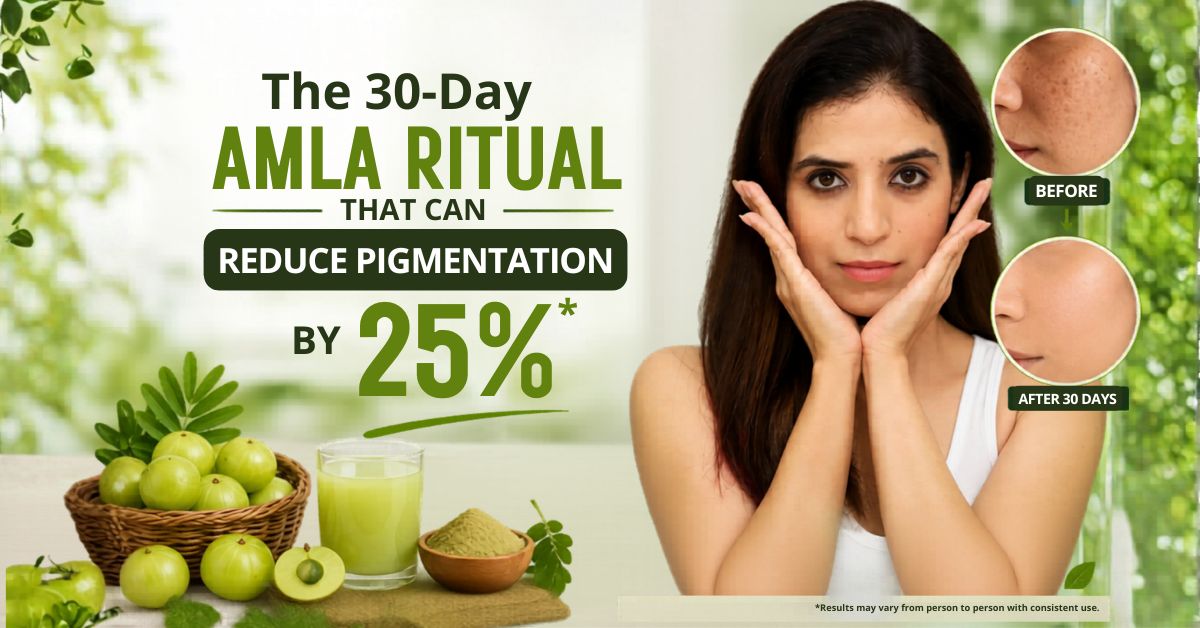
Key Takeaways Amla (Indian gooseberry) is one of the most concentrated natural sources of Vitamin C — far higher than oranges or lemons. Black pepper contains piperine, which increases the bioavailability of Amla’s Vitamin C significantly. Taken consistently for 30 …
Key Takeaways Blue light (HEV light) from phones, laptops, and LED lighting penetrates skin deeper than UV-A or UV-B rays. It stimulates melanin production through a different pathway than sunlight — which is why indoor skin darkening is real. 8–10 …
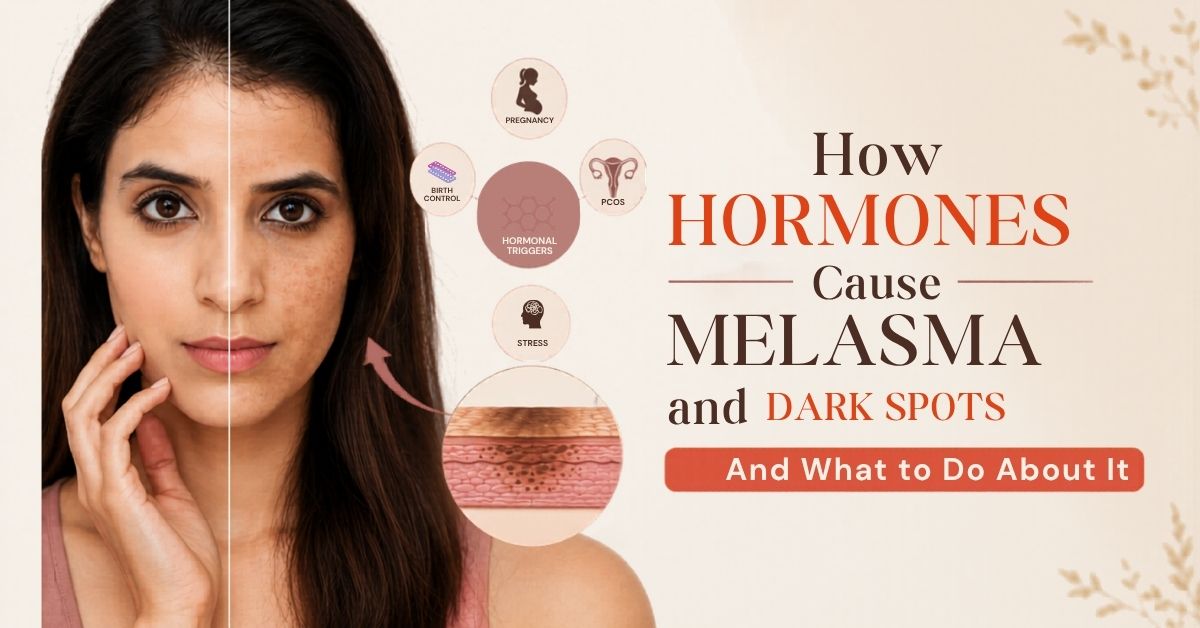
Key Takeaways Estrogen, progesterone, and androgens all influence melanin production directly. PCOS, pregnancy, birth control, and menopause are the four most common hormonal pigmentation triggers in women. Melasma appears as butterfly-shaped patches on the forehead, cheeks, and upper lip — …
Key Takeaways A congested liver pushes unfiltered toxins out through the skin — often as dark patches, dullness, and breakouts. The gut-skin connection is real: poor digestion and chronic inflammation directly stimulate excess melanin production. Ayurvedic herbs like Manjistha, Amla, …
Key Takeaways Pigmentation is almost always an internal problem that shows up on your skin — not the other way around. The most overlooked triggers are liver congestion, Vitamin D deficiency, and hormonal shifts. Blue light from your phone and …
Key Takeaways Manjistha (Rakta Shodhak) purifies the blood and supports the liver — both directly connected to melanin overproduction. Turmeric with black pepper inhibits tyrosinase, the enzyme that starts melanin synthesis, while reducing gut and skin inflammation. The three-ingredient liver …
Key Takeaways Sugar triggers glycation — a process where sugar molecules bind to and damage collagen fibres, causing skin puffiness, dullness, and pigmentation. High sugar intake spikes insulin, which drives body-wide inflammation. Skin inflammation directly stimulates melanin production. Reducing sugar …
Key Takeaways Mulethi (licorice root) is one of the most effective natural tyrosinase inhibitors — it directly slows melanin production at the skin surface. Masoor Dal (red lentils) contains niacinamide precursors and skin-renewing enzymes that fade post-acne marks and even …
Key Takeaways Face yoga improves blood circulation to the facial skin, increasing the delivery of oxygen and nutrients while clearing toxins that drive pigmentation. Lymphatic drainage through facial movement reduces the toxic load in facial tissues — one of the …
Key Takeaways Years of synthetic skincare use accumulates oxidative stress and chemical sensitisation in the skin that worsens pigmentation. Many brightening serums and active ingredients create initial improvement followed by long-term dependency and skin barrier damage. A 21 to 30-day …