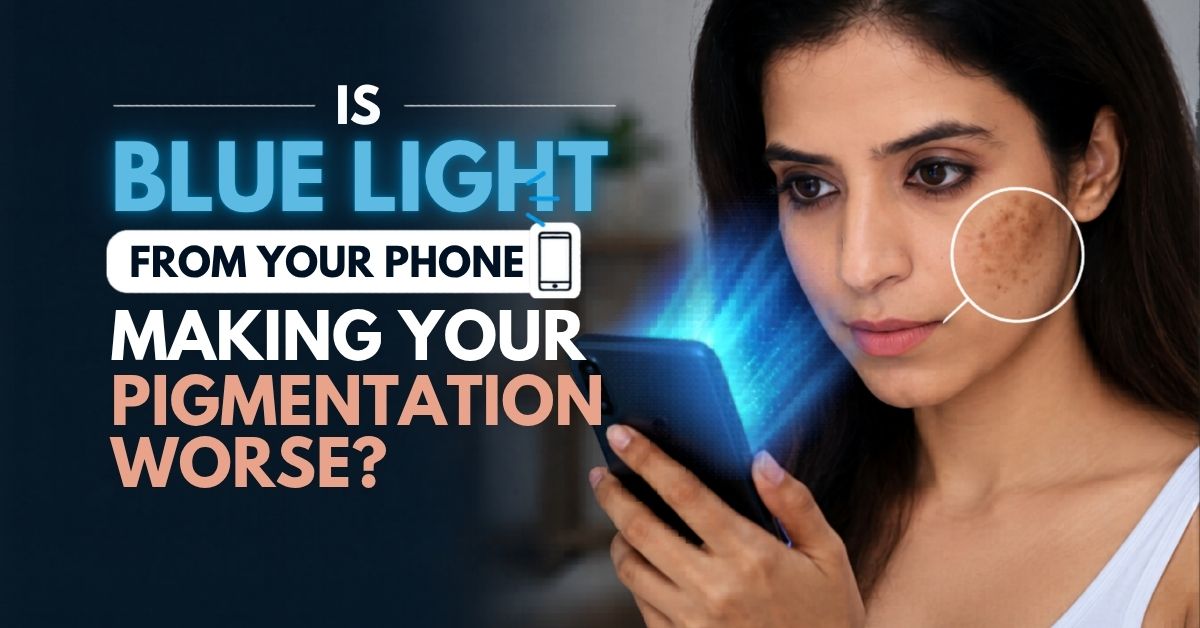
Is Blue Light From Your Phone Making Your Pigmentation Worse?
- Blue light (HEV light) from phones, laptops, and LED lighting penetrates skin deeper than UV-A or UV-B rays.
- It stimulates melanin production through a different pathway than sunlight — which is why indoor skin darkening is real.
- 8–10 hours of daily screen exposure is a significant cumulative pigmentation trigger, especially in deeper skin tones.
- Blue light also generates oxidative stress in the skin, which accelerates ageing and worsens existing pigmentation.
- Antioxidant-rich topical care and dietary antioxidants are the most practical protective response.
“I barely go out in the sun. I wear SPF every day. But my skin keeps getting darker.” This is something Mansi Gulati hears often — and for a large proportion of these women, the answer is sitting in their hands or on their desk right now.
Blue light is one of the least discussed pigmentation triggers. It’s invisible, it’s constant, and most skincare advice hasn’t caught up with it yet. But the research is clear enough that ignoring it is no longer a defensible position.
Understanding blue light — what it is, how it differs from UV, and what it actually does to skin — helps explain why pigmentation in many urban women doesn’t follow the patterns that traditional sun protection advice would predict.
What Blue Light Actually Is
Visible light sits on the electromagnetic spectrum between UV rays (invisible, high energy) and infrared light (heat). Blue light, or High Energy Visible (HEV) light, is the high-energy end of the visible spectrum, with wavelengths between 380–500 nanometres.
The sun is the largest natural source of blue light. But digital screens — phones, laptops, tablets, monitors — emit blue light directly. LED bulbs, which now dominate most home and office lighting, do too.
The difference from UV is important: UV is filtered by glass and by sunscreen. Blue light is not filtered by either. SPF-50 sunscreen provides essentially zero protection against HEV light. Standard glass windows block very little of it. The blue light in your environment reaches your skin regardless of whether you’ve applied sun protection.
How Blue Light Triggers Pigmentation
UV rays trigger melanin through one pathway — photoactivation of melanocytes that produces a rapid, protective response. Blue light works differently.
HEV light generates reactive oxygen species (free radicals) in the skin. These free radicals activate inflammatory pathways that, in turn, stimulate melanin production. The melanin response is slower than the UV response but it’s cumulative — it builds up with repeated daily exposure.
Research published in dermatology journals has shown that blue light triggers longer-lasting pigmentation than UV light in some skin types, particularly in Fitzpatrick types IV–VI — the medium-to-dark brown skin tones that cover most South Asian women. The melanin produced by blue light exposure may be more resistant to fading than UV-induced pigmentation.
This connects directly to the broader picture of what drives pigmentation on the face — blue light is one part of the full picture that includes liver health, hormones, and gut inflammation.
The Daily Exposure Problem
UV exposure is intermittent for most women — a few hours outdoors, more on weekends or holidays. Blue light exposure for an office worker or someone who works from home is 8–10 hours a day, 5–7 days a week, 52 weeks a year. The cumulative dose is enormous.
And it’s not just screens. LED lighting in homes and offices produces blue light continuously. Many women spend their entire waking day — from the morning alarm screen check to the evening wind-down scroll — in consistent blue light exposure without any break.
This is why many women find their pigmentation gets worse during periods when they are working more intensively at a desk — not more time in the sun, but more time in front of a screen.
Blue Light and Oxidative Stress — The Ageing Connection
Beyond melanin, the free radical generation from blue light exposure creates oxidative stress in the skin that degrades collagen and elastin. This accelerates skin ageing alongside worsening pigmentation.
Women dealing with both dark spots and premature lines or loss of firmness should consider whether blue light exposure is a contributing factor. The combination of oxidative stress and melanin stimulation is a double burden that standard anti-ageing and brightening products are not formulated to address. Face yoga exercises that address anti-ageing work on circulation and muscle tone alongside this.
What You Can Do About It
Complete avoidance of blue light is not realistic. But reducing exposure and protecting the skin against its effects is. These are the most practical approaches:
Screen filters and settings: Most phones and laptops now have a “Night Mode” or “Night Shift” setting that shifts the screen colour to a warmer tone, reducing blue light emission. Enable this as a default, not just at night.
Screen distance: Blue light intensity decreases significantly with distance. Holding a phone 30cm from your face versus 15cm roughly quarters your blue light exposure from that source.
Dietary antioxidants: Vitamin C (Amla), curcumin (turmeric), and polyphenols from green vegetables neutralise free radicals generated by blue light. Taking Amla with black pepper daily — which Mansi recommends as an internal ritual for pigmentation — also directly addresses the oxidative stress pathway that blue light triggers. See the full 30-day Amla ritual for pigmentation for details.
Antioxidant topicals: Topical Vitamin C, niacinamide, and turmeric-based formulations applied before screen time help neutralise surface free radical activity. The natural masks Mansi recommends — particularly the Mulethi and rice flour combination — contain antioxidant and melanin-inhibiting compounds that are relevant for blue light-induced pigmentation.
The Chemical Break: If your skincare routine currently involves multiple synthetic serums and active ingredients, those products often sensitise the skin and increase its reactivity to blue light. Taking a break from synthetic skincare and returning to natural formulations is worth considering — this is covered in detail in the blog on stopping synthetic skincare for pigmentation.
For a comprehensive approach to pigmentation that addresses blue light alongside hormonal, dietary, and liver causes, Mansi’s Pigmentation Correction Challenge covers all of it in one structured programme.
Frequently Asked Questions
Does blue light from phones and laptops really cause dark spots?
Yes. Research shows that HEV (blue) light stimulates melanin production through an oxidative stress pathway that is separate from UV-triggered melanin. It generates free radicals in the skin that activate inflammatory signalling, which in turn stimulates melanocytes. The effect is cumulative and particularly pronounced in medium-to-dark skin tones.
Does SPF sunscreen protect against blue light?
Standard SPF sunscreens provide very little to no protection against blue light (HEV). They are formulated to block UV-A and UV-B wavelengths. Some formulations with iron oxides offer partial HEV protection, but most conventional sunscreens do not. Antioxidant-based topicals are more relevant for blue light defence than SPF alone.
How many hours of screen time is enough to cause visible pigmentation?
There is no established “safe” daily threshold, but research indicates that cumulative exposure matters more than individual sessions. Working 8–10 hours daily in front of screens over months and years represents a significant blue light dose, particularly for women with deeper skin tones who are more prone to melanin overproduction from HEV stimulation.
Is LED lighting at home also a source of blue light exposure?
Yes. Modern LED bulbs emit in the blue-white spectrum. Home and office LED lighting contributes to total daily HEV exposure alongside screens. Warm-white LED bulbs (colour temperature of 2700K–3000K) emit significantly less blue light than cool-white or daylight LEDs (5000K–6500K).
What foods help protect skin from blue light damage?
Foods high in antioxidants — particularly Vitamin C, curcumin, and polyphenols — neutralise the free radicals generated by blue light exposure. Amla (Indian gooseberry), turmeric with black pepper, green leafy vegetables, and foods rich in beta-carotene all provide relevant protective nutrients.