
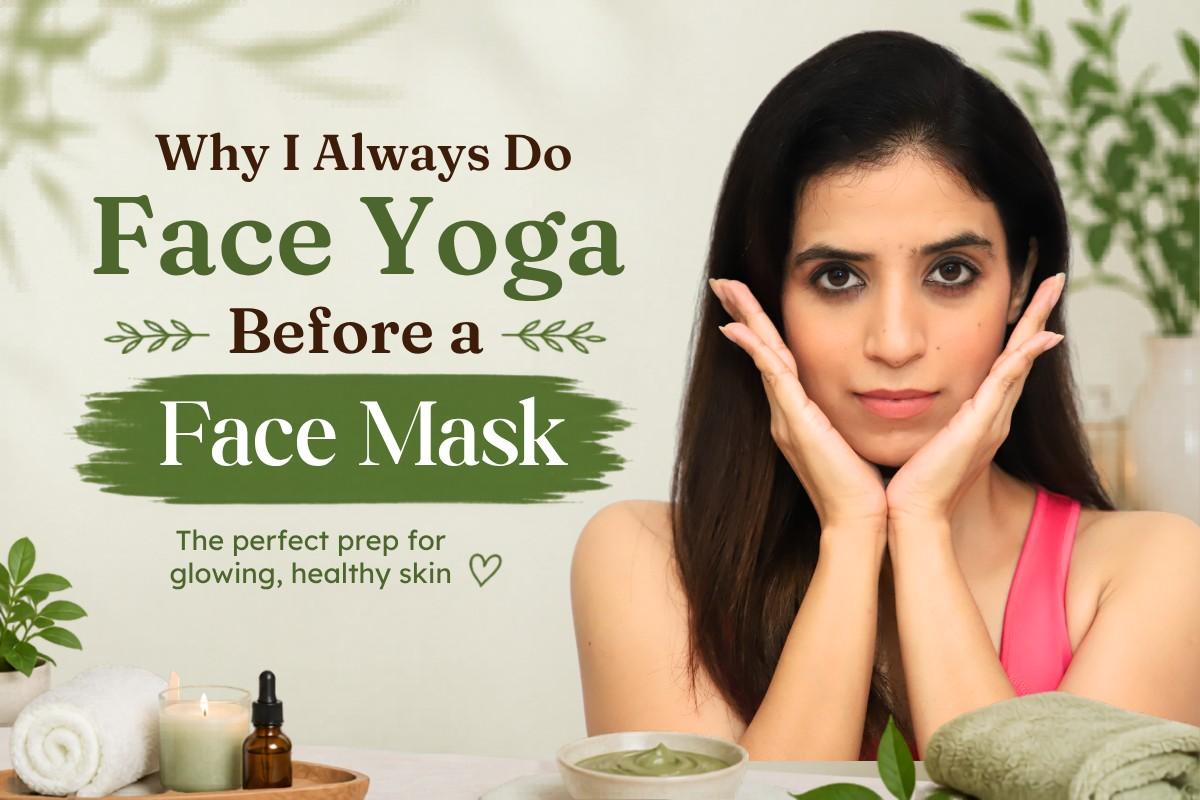
Why I Always Do Face Yoga Before a Face Mask — And What It Does for Your Skin
I used to apply my face mask the way most people do — straight after washing my face, lying down, waiting. The mask did its job. But when I started adding five minutes of face yoga before putting the mask on, something changed.
My skin looked different. Not just after the mask — the glow lasted longer. Products absorbed better. The puffiness I’d been ignoring every morning started going away.
This isn’t complicated to explain. It’s basic biology.
Why Blood Circulation Is More Important Than Your Mask Ingredients
Skincare products work by penetrating the outer layers of the skin. But how well they penetrate depends heavily on what’s happening underneath — specifically, how much blood is circulating near the surface at that moment.
Good circulation means your skin cells are active, pores are slightly open, and the surface is ready to receive. Low circulation — which is very common in the morning or after hours at a desk — leaves skin looking dull, congested, and less able to absorb anything you put on it.
Face yoga gets the blood moving. That’s the mechanism. Everything else follows from that.
Lymphatic drainage is the other piece. The lymphatic system moves waste and fluid out of tissues. When it’s sluggish — which happens when we’re sedentary or stressed — the face looks puffy and congested. Gentle tapping and pressure through face yoga activates drainage, which reduces puffiness and makes the skin look clearer before you’ve even applied anything.
The 5-Minute Face Yoga Sequence to Do Before Your Mask
You don’t need a mirror or a special space. Do this standing at your bathroom counter, right after cleansing.
Step 1 — Lymphatic Tapping (1 minute)
Using your fingertips, tap lightly along your jawline from chin to ear, then up and around the cheekbones, across the forehead, and down either side of the nose. This isn’t pressing — it’s a light, rhythmic tapping movement.
The goal is to stimulate the lymph nodes clustered at the jaw, temples, and neck. A minute of this is enough to start moving congestion out of the face.
Step 2 — Cheek Sculpting (1 minute)
Place your fingertips on your cheekbones. Gently press and hold while puffing your cheeks with air. Hold for five seconds, release. Repeat six to eight times.
This works the underlying muscle directly and pulls blood circulation toward the cheeks — exactly where most masks do their most visible work.
Step 3 — Forehead Smoothing (1 minute)
Place both palms flat against your forehead. Apply gentle upward pressure and slide slowly toward your hairline. Repeat eight to ten times.
Most people carry a surprising amount of tension in the forehead, especially if you spend time looking at a screen. This releases that tension and opens the skin in the brow area.
Step 4 — Under-Eye Tapping (30 seconds)
Use your ring fingers — they’re the weakest fingers, which makes them the safest for this area. Tap lightly from the inner corner of each eye outward, along the orbital bone. Never drag. Never use the index or middle finger here.
Under-eye skin is the thinnest on the face. The goal is to gently activate drainage, not stimulate muscle. This alone can reduce morning puffiness within two to three weeks of consistent practice.
Step 5 — Neck and Jaw Release (1.5 minutes)
Tilt your head slightly back. Press your tongue firmly to the roof of your mouth. Hold for 10 seconds, release. Repeat four to five times.
Then use your knuckles to massage along the jaw from chin to ear with gentle, firm pressure. This releases the muscles that pull the lower face down over time and pushes circulation directly into the chin and jawline area.
Apply Your Mask Immediately After
Don’t wait. As soon as this five-minute sequence is done, your skin is warm, pores are slightly open, and circulation is at its best. This is the window. Apply your mask immediately.
Which mask you use depends on your skin type:
| Skin Type | Best Mask |
|---|---|
| Normal | Curd + Honey + Rose Water |
| Dry | Avocado + Milk Cream + Almond Oil |
| Acne-Prone | Multani Mitti + Neem Powder + Aloe Vera |
| Tanned / Brown | Tomato Pulp + Lemon Juice + Turmeric |
| Dull / Glow Goal | Papaya + Honey + Saffron Water |
Full recipes, quantities, and timing for each of these are in this post →
What to Do After the Mask Comes Off
Rinse with cool water — this closes the pores that just opened to do their job. Pat dry gently, don’t rub.
Before moisturising, take two minutes to do gentle upward strokes with your fingertips — from the jawline, up the cheeks, toward the temples. Keep the movement light and always move upward. This seals the work the mask has done, extends the glow, and keeps the lymph moving so benefits don’t just fade on the surface.
Apply your moisturiser while the skin is still slightly damp. Your skin is now primed to absorb it properly.
How Often Should You Do This?
The full routine — face yoga plus mask — three times a week is ideal for visible results.
Daily face yoga alone, even without a mask, makes a real difference. Most of my students who commit to five minutes daily for six weeks come back with photos that are genuinely hard to believe. Skin looks more lifted, less puffy, and the colour is better. Not because anything dramatic happened — because circulation is finally consistent.
The results from face yoga are cumulative. Five minutes occasionally does very little. Five minutes consistently, every day, adds up fast.
A Note on Active Acne
If you have active breakouts, don’t apply massage or pressure directly over those areas. Work around them. Focus the face yoga sequence on the forehead, temples, cheekbones, and jaw. The improved overall circulation will still benefit the skin without aggravating inflamed spots.
Frequently Asked Questions
Should I do face yoga before or after a face mask?
Before. The whole point is to prepare the skin — warm it up, open the pores, get the blood moving — so the mask absorbs better. Face yoga after the mask is optional but helpful for sealing in the results.
How long does face yoga take to show results?
Subtle changes in two weeks. More visible lifting and improved skin tone in six to eight weeks of consistent daily practice. Skin tightening typically takes three to four months.
Can face yoga cause wrinkles or skin stretching?
No — when done correctly, face yoga uses gentle, controlled movements that lift the muscles rather than pull or stretch the skin. The movements should never feel like dragging or tugging. If they do, ease up.
Can I do face yoga if I have acne?
Yes. Avoid direct pressure over active breakouts, but the rest of the routine is safe. The improved circulation and lymphatic drainage can actually help with overall skin clarity over time.
What is the best time of day to do face yoga?
Morning is ideal — it reduces overnight puffiness and gives skin a head start. Evening works too, especially before a mask. The key is consistency, not perfect timing.
Does face yoga replace skincare products?
No. Face yoga improves the skin’s ability to absorb and use the products you’re already applying — it doesn’t replace them. Think of it as preparation. The products do their job better because the skin is in a better state to receive them.
Ready to build this into a real routine? Mansi’s online face yoga programmes walk you through everything — step by step, skin type by skin type. Join hundreds of women who’ve seen visible changes in their skin in six weeks.
Join Mansi’s Face Yoga Challenge →
Mansi Gulati is a certified Face Yoga Expert and author based in India. She teaches face yoga through online programmes, live workshops, and books designed for every age and skin type.